I Wrote Not One Line
A whole video game — the engine, the art, the story, two dozen songs, the jokes — and I did not write a single line of any of it. Not code, not dialogue, not a melody. I supplied a wish, a friend’s original spark, and a great many opinions. This is the honest account of what that collaboration was actually like: the swarm, the spirals, the day I asked whether the software update could contain jokes, and the friend it’s quietly for.
- Part 1 · The build — a game engine, and a robot that plays the game
- Part 2 · The design — pixels, jokes, and two dozen songs it can’t hear
- Part 3 · The workflow — zero lines written by hand (you are here)
- Part 4 · The architecture — inside the engine
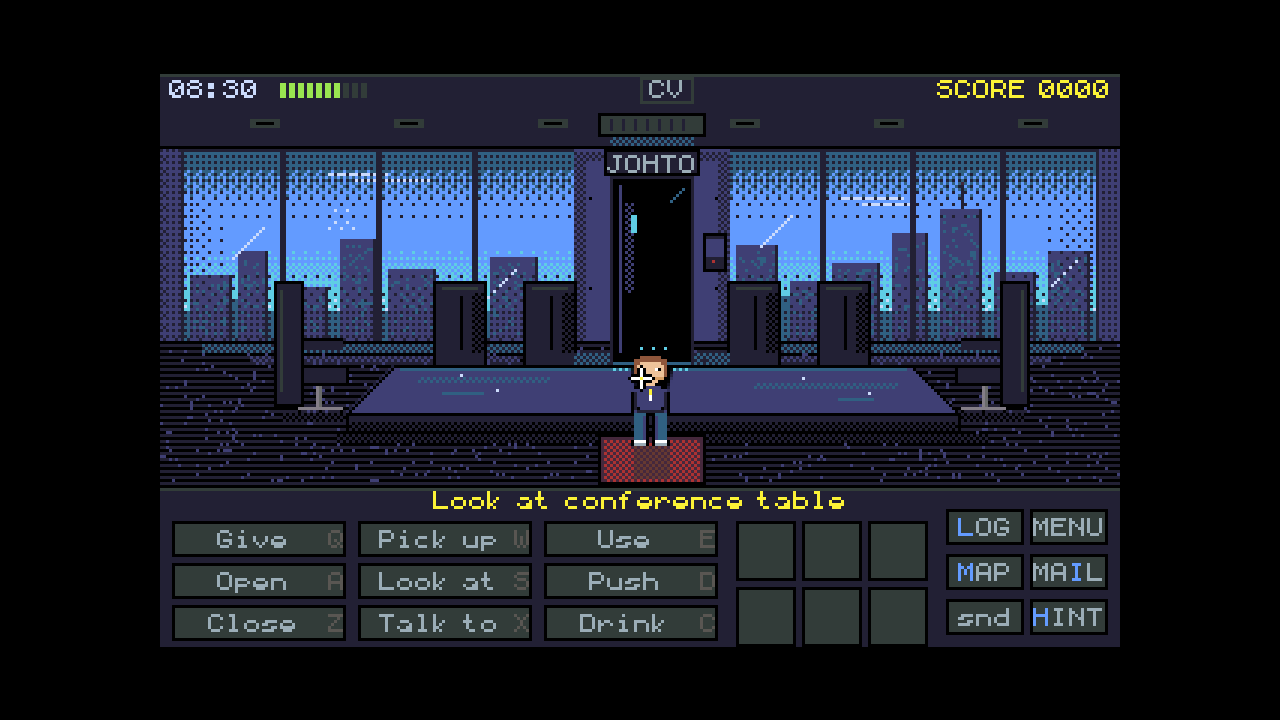
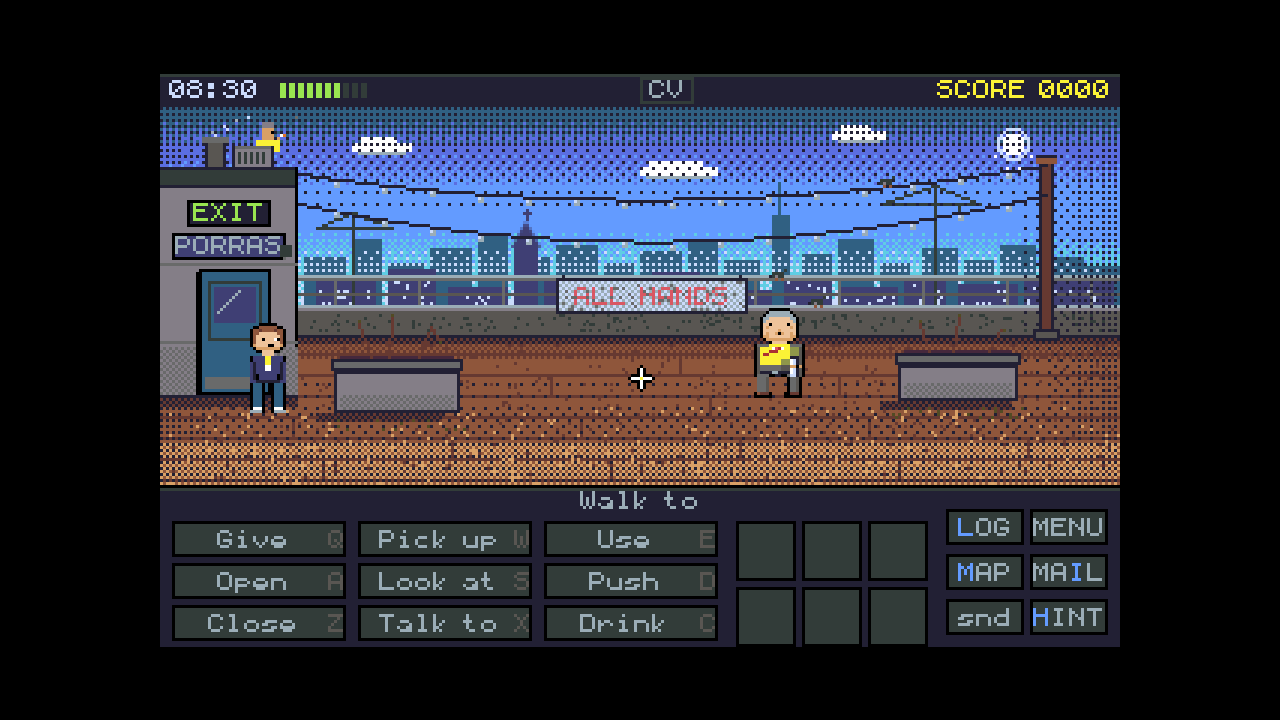
It started with a single paragraph. I told Claude I had an old text adventure — a friend’s, a satire of life at an IT company — and that I wanted to turn it into a modern pixel adventure with a comical, slightly retro look, the old LucasArts and Sierra spirit, with simple, chiptune-ish music. I asked it to suggest directions for the art and style. That was the entire brief. Everything in the game today unspooled from those few sentences.
Claude didn’t just start typing. It came back with menus — here are three directions for the art, here are ways the controls could work, here’s how the music could go. I picked. And then it did something that still feels like science fiction: it split itself into a small army of helper workers, each building a different corner of the game in parallel, all following one shared rulebook so the pieces would fit together. A room here, a character there, a music track somewhere else, dozens at a time.
I wasn’t a programmer with an assistant. I was a director with a studio — and the studio was one intelligence, working in a dozen places at once, that I could talk to in plain Finnish-accented English.
The bit where I nervously asked for a safety net
My most useful instinct in the whole project wasn’t creative — it was anxious. Fairly early I asked, essentially: how do we know all the endings, the deaths, the secrets, the puzzles actually work, now and forever? That question is what produced the robot playtester I described in Part 1. And it set a house rule that I’m rather proud of: you are never allowed to weaken a test just to make it pass. If the test complains, the test has found a real bug — you fix the game, not the test. That one rule, more than anything, is why a game built this fast is also this sturdy.
The honest part: it went wrong, repeatedly
I promised candour, so here are the scars.
There was a stretch — four separate attempts — where the voice feature simply would not work, and Claude kept confidently shipping fixes that didn’t fix it. It was chasing ghosts. The spiral only ended when it stopped guessing, threw away its changes back to a version known to work, and built a tiny separate test page to isolate the problem. The culprit turned out to be gloriously specific to my machine: my browser had a hundred and ninety-nine different voices installed, and the code hadn’t expected such an embarrassment of them. The lesson Claude wrote down afterwards was a good one for any engineer, human or otherwise: get the ground truth before you ship a speculative fix.
There were others. At one point a usage limit abruptly killed off a couple of dozen of those parallel helper workers mid-task; Claude picked itself up, worked out which pieces were already done, and carried on from where it fell. Another time, one over-eager helper kept “improving” things nobody had asked it to touch while it was supposed to be doing translations, and I had to step in and tell it, more or less, to leave everything alone and just let it finnish the Finnish. (The pun was an accident. I kept it.) None of this is the frictionless magic the demos promise. It’s real work, with real dead-ends. It’s just that the dead-ends resolved in minutes, and I never had to open the code to get out of them.
“Does the auto-update include humor?”
If you want the whole spirit of this collaboration in one line, it’s a question I asked Claude near the end. The game quietly checks for new versions and offers to update itself, and at some point I typed: “does the auto-update include humor?”
I wasn’t joking, exactly. When your collaborator will genuinely build whatever you can describe, you start to ask for things you’d never dare ask a person — a singing robot executive, a horror maze in an office comedy, jokes in the update notification — and it just… does them. The ceiling stops being “what can be built” and becomes “what can you think of.” That shift — from typing to imagining — is the real story of building this way, and it’s why I keep doing it.
Who it’s for
I’ll end where the game quietly begins. It closes with the old disclaimer that any resemblance to real companies, living or restructured, is purely accidental — a wink, and a sincere one. This is a comedy: fiction, inspired by the texture of real working life, not a portrait of anyone in particular.
Underneath the whole thing is a small act of friendship. Someone I worked with once wrote a sharp, funny little text adventure and never made more of it. I couldn’t stop thinking that it deserved to be seen — walked around in, listened to, laughed at properly. I don’t have the skills to have built that alone, and I certainly didn’t have the months. But with an AI as my entire studio, I could take a friend’s spark and hand it back to them as a whole world — pixels, music, jokes and all. I wrote not one line. I’m still, somehow, proud of it. For now it lives as an invitation-only beta.
This is the last of the three story parts. If you skipped ahead: Part 1 is the engine, Part 2 is the art and the music. And for the same “point at a machine and a thing appears” approach applied to something entirely practical — a family home — there’s a separate series.